
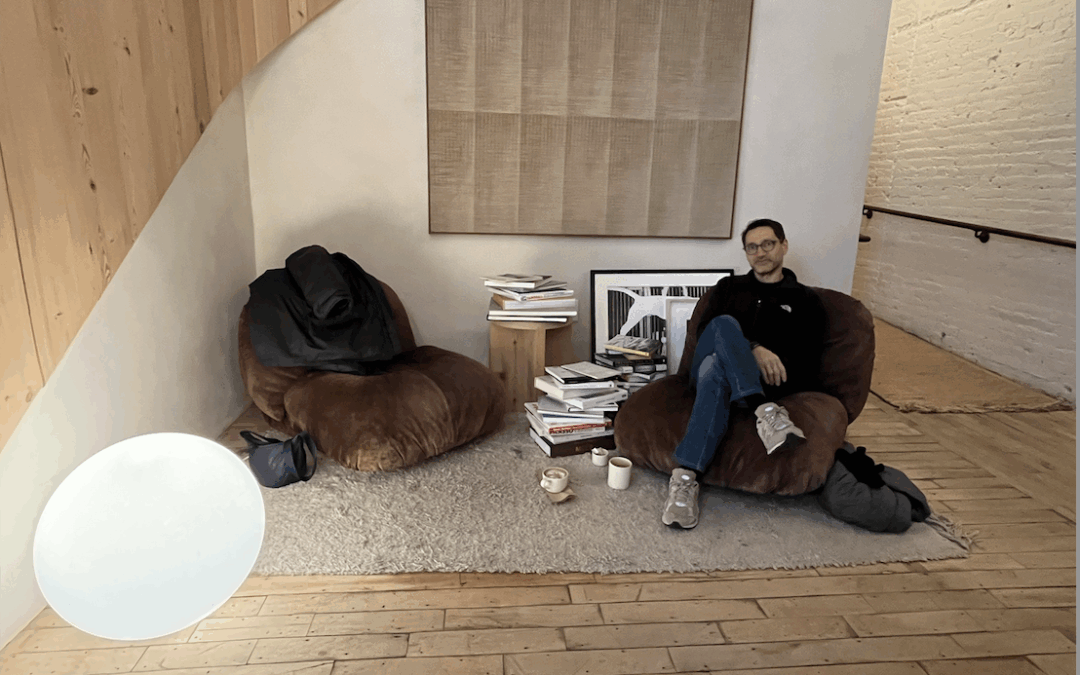
Last year I travelled overseas four times—part holiday, part research, part permission slip to notice what’s happening in the world when you lift your eyes off the laptop and wander.
And one trend jumped out at me everywhere I went: smart retailers are turning their shops into places people actually want to stay. Not rush through. Not “click and collect.” Not “tap and go.”
Stay.
Places designed for lingering, connection and curiosity. Places with a pulse.
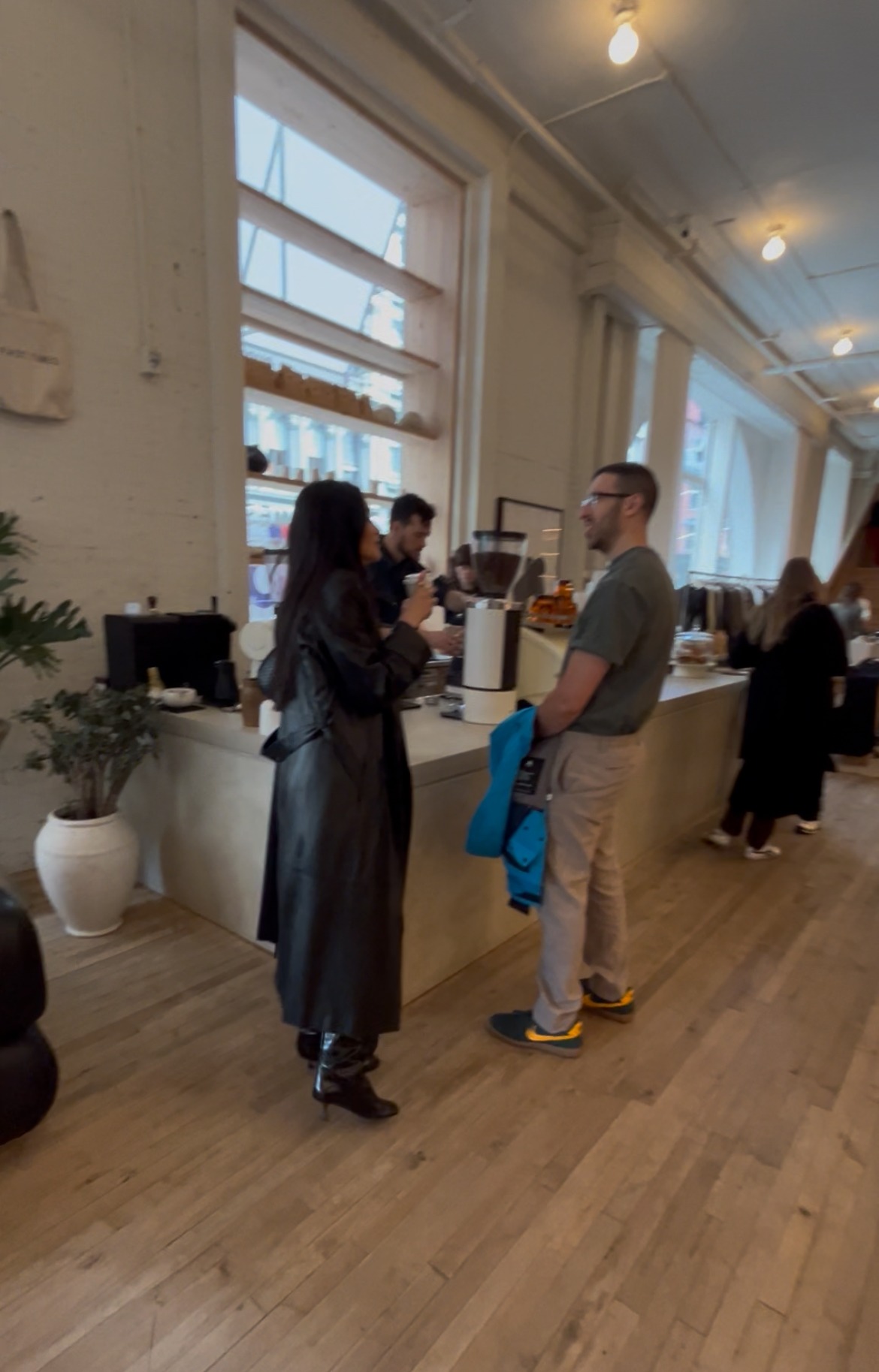
Marketers love a neat phrase, so let’s call it what it is: the rise of the Third Space. Where retailers are competing for what I call the Dwell Dividend.
The term comes from American sociologist Ray Oldenburg, who first wrote about “third places” back in 1989—spaces that sit between home and work where people gather, feel welcome, and belong.
Think libraries, cafés, barber shops in earlier eras. Now, in an age of disappearing local pubs and rising loneliness, retailers are realising they themselves can be the community glue.
Oldenburg argued that societies thrive when people have somewhere to spend unstructured time. Modern brands have finally caught up and realised customers do too.
It’s the retail equivalent of your favourite cosy café or sunlit corner booth. Somewhere that’s not home and not work, but still feels like yours. And after two decades of stripping friction out of the customer journey, brands are realising they stripped out something else along the way: feeling.
For years the game has been speed: faster checkouts, tighter funnels, digital everything. But efficiency has a shadow side. When you make it easy for customers to leave as soon as they buy, don’t be surprised when they don’t come back.
And what many brands overlook is that lingering has a dollar value.
Research from retail analytics firm TimeTrade found that customers who stay just five minutes longer in a store are 15 per cent more likely to make a purchase than those who rush in and out. Increasing dwell time doesn’t just shift the mood—it shifts revenue.
In other words, creating a space people want to inhabit is a measurable sales strategy. The more time a customer feels relaxed and connected in your world, the more likely they are to buy from you now and come back later.
Last year I made multiple trips to Manhattan and was reminded why that city remains the gold standard for customer experience. It gives people reasons to linger.
Buck Mason on Broadway is my personal benchmark. Yes, it’s a flagship store, and yes, it looks like one. But it’s the atmosphere that gets you. Warm, masculine, lived-in. Records spinning. Timber burning. Staff who talk with you, not at you.
I wandered in thinking I’d stay ten minutes. I left an hour later, lighter in the credit card and happier for it.
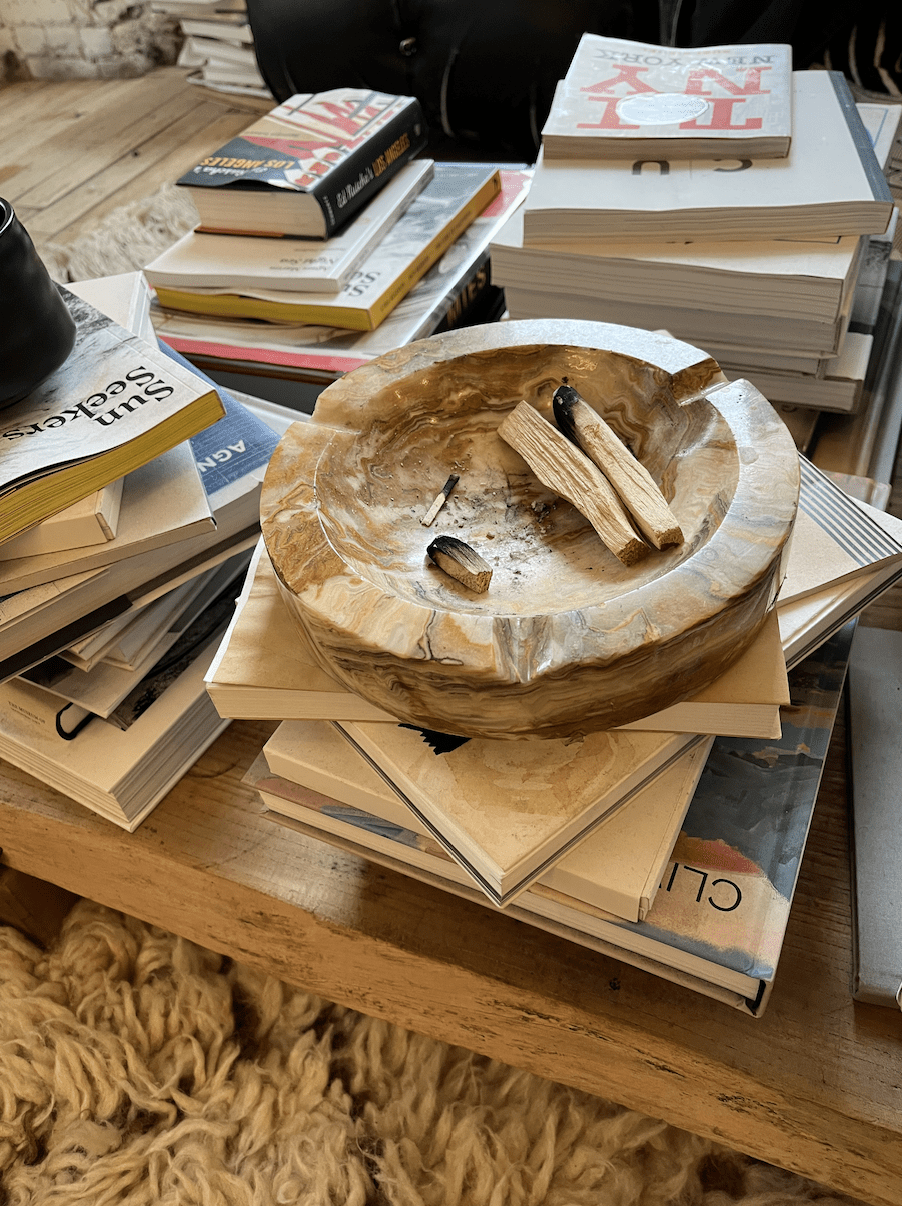
Krewe in New Orleans has a similar magnetism. They sell eyewear, but they’ve built an experience that feels like stepping inside a lifestyle. You want to try a little of it on. It’s intimate without being intimidating, and stylish without being sterile. Again, I lingered.
Linger. There’s something both personal and commercial about that word. Because when people slow down, they browse. When they browse, they buy. When they buy in a space that feels good, they come back. The Dwell Dividend at work!
Back home in Melbourne, Rodd & Gunn has taken its retail experience much further than a standard menswear store. Behind the rack space of clothing and heritage fabrics you’ll find a multi-level hospitality precinct built around the idea that people want to stay.
On the lower ground level sits a moody wine bar and cellar with house-made snacks and cocktails that signal “don’t rush.” Above that, an intimate members’ bar with rich timber and sculptural lighting creates the sort of atmosphere where conversations stretch.
Over the next year, further spaces are set to open, blurring the lines between shopping, dining and socialising even more.
Again, the logic is simple. Feed people, they stay longer. Stay longer, they connect more. Connect more, they buy with confidence and return with intent.
MECCA is another case study in dwell time. Their Melbourne CBD flagship invites exploration and experimentation. You go in for a lipstick and leave with a sense of having been somewhere.
But here’s the part business owners can sometimes miss: this isn’t a luxury strategy. You don’t need an architect and a whisky licence to create a Third Space.
You need intention.
Every business—literally every business—can build dwell time into their customer experience. Not by asking customers to stay, but by giving them reasons not to leave.
Think of the last time you walked into a space that made you feel something. Chances are, your senses were working overtime.
Some simple places to start:
Sound: music that makes people feel welcome, not rushed. Taste: coffee, biscuits, mineral water—tiny gestures, big effect. Touch: textures that relax people. Yes, even in waiting rooms. Smell: the fastest shortcut to memory and mood. Sight: books, magazines, artwork, greenery. Visual pauses for the mind. Community: a noticeboard, a photo wall, a sense that “people like me come here”
You can apply this anywhere. A vet clinic with fresh flowers and dog-walking maps. A children’s activity centre with sensory zones, reading nooks and calm-down corners so parents don’t feel judged or rushed. A hair salon that offers chargers, great playlists and glassware that isn’t an afterthought. A physio clinic with books and hot tea, not faded pamphlets and daytime TV.
None of these ideas require a giant refurb. They require care. And while care is memorable, the feeling of wanting to linger that it creates is also a great marketing with no money strategy.
When customers feel connected, the transaction becomes more than a transaction. Oldenburg called it social infrastructure. Today we might call it psychological ownership, but simply put, it’s belonging.
Because when customers feel like your space is their space, you’re not just selling a product, you’re earning a place in their week.
That’s what Buck Mason, Krewe and Rodd & Gunn are doing. They’ve moved from shop to living room. And that shift builds loyalty faster than any points program ever could.
Here’s what I want every business, from the smallest studio to the biggest retailer, to sit with as they map out the year ahead:
Are you a transaction or are you a destination?
Are you the place people rush through, or the place they return to because something in the room (and in themselves) feels better when they’re there?
Speed can be seductive, but speed doesn’t make customers stay. Experiences do. Atmosphere does.
Walk into your business tomorrow like you’ve never been there before. Slow down. Look around. Listen. Is there anywhere to sit? Is there anything to read? Would someone want to talk here? Would someone want to stay?
If the answer is no—fantastic. Congratulations. You’ve found your opportunity to create a business where customers remember not just what they bought but where they felt something. Bet they come back, and I bet they bring someone to the place that felt like theirs.
In 2026, the brands that win won’t be the fastest. They’ll be the ones who turn their businesses into Third Spaces people don’t want to leave.