
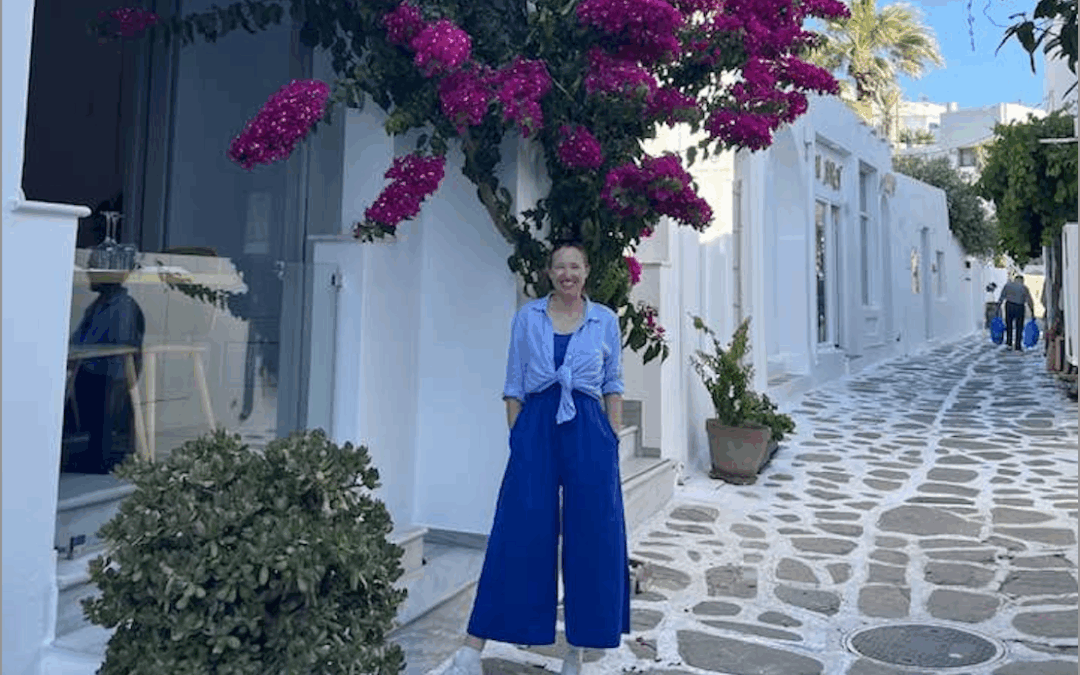
I’ve had a very big year of travel. Some of it was purely for pleasure — think Croatia, Montenegro, Albania and Greece in June. But most of it was for business: Birmingham in the UK, New Orleans, New York, plus plenty of trips up and down Australia’s east coast and over to the west.
Sure, business travel can be exhausting, but as Forbes puts it, it’s the “hidden talent strategy CEOs are overlooking.” CEO or sole trader, start thinking that business travel can be one of your best investments.
Truth is, every trip has a payoff beyond the meetings and conferences. Travel can’t be replicated with Zooming. Being out in the world changes the way you see, think and create.
Here are five reasons travel is good for business—not just in the obvious ways but in some of the surprising ones too.
- Spotting trends where they live
You can read reports and white papers until your eyes cross, but nothing beats seeing a trend in action in real time.
In Puerto Rico, I met a cigar house owner who was obsessive about merchandising. He didn’t just sell cigars. He created a ritual around the purchase, turning shopping into theatre and making cigars—a hard sell—sexy.
In New York, I saw newly-opened French department store Printemps smashing it in New York. Not in midtown but in the Financial District, betting bankers and lawyers want a luxury store on their doorstep. That sort of bold move is something you only notice when you’re there on the ground.
And it’s not just me waxing lyrical about bakeries and cigar boxes. Forbes notes that for every dollar spent on business travel, companies see $9.50 in new revenue and $2.90 in new profit.
Travel is research in 3D. You see ideas before they’re dissected in reports, and you can bring them home and adapt them while they’re still fresh.
- Innovation through collision
One of the joys of travel is the way ideas bump into each other.
In the UK and U.S., I was struck by how much interest there is in my work around Marketing to Mums. Conversations with colleagues showed me just how universal the insights are—a big validation of the work I do.
But it’s also about small sparks. A café in Rhode Island that remembered my order and nailed loyalty. A New Orleans music venue covered in handwritten notes that created instant community. Those little encounters often spark bigger ideas.
A recent Forbes article called business travel a “quiet but powerful lever” for leaders. I agree. It’s not about the airport lounge. It’s about seeing differently then applying that perspective back home.
Travel forces you into environments where you’re the outsider, which makes you notice what others don’t. You see gaps in the market, quirky start-ups, creative problem-solving approaches. Sometimes it’s as simple as realising that an idea in one country could flourish in another.
- Building resilience and problem-solving muscles
This one doesn’t usually make Top 5 lists, but it should.
Flights get cancelled. Taxis don’t show. Wi-Fi collapses just as you’re about to present. None of these are fun, but when they happen I come home a bit tougher.
As biz owners, we’re always told to get comfortable with ambiguity. Nothing teaches that better than being stranded at a foreign airport at 2am, having to reschedule meetings and presentations. Travel forces you to stay calm, improvise, and keep moving.
And resilience isn’t just logistical. It’s cultural too. Each time you adapt to new etiquette, pace or language, you stretch yourself as a communicator and a leader.
Harvard research puts resilience and agility at the top of the skills leaders need for the future. Travel is resilience bootcamp. You don’t build that muscle sitting at your desk.
- Creating space for reflection and clarity
One of the biggest gifts of travel is mental distance from the everyday. At home you’re reactive, answering emails and putting out fires. Step away— truly step away, not just for a long weekend—and suddenly things look different.
I often find my best insights when I’m far from the office. On the Greek island of Milos, I discovered a bakery where I worked on emails most mornings while eating filo spinach and feta pie and delicious desserts in a leafy courtyard. It wasn’t just food, it was a whole experience that pulled me back day after day. That café became my overseas office.
Away from the noise, ideas have room to breathe. You start asking bigger questions: Am I on the right track? What needs to change? Where should I double down?
Travel gives you clarity not only on your business, but on your role within it.
- New networks, new revenue streams
The serendipity of travel is one of its greatest payoffs.
This year, I’ve caught up with international colleagues over coffee, swapped ideas with fellow speakers at conferences, and even sketched out new services and bespoke presentations sparked by conversations I never would’ve had if I’d stayed in Australia.
These unplanned connections often turn out to be the most valuable. Sometimes it’s not about chasing revenue directly but opening yourself up to possibilities you didn’t know existed.
CEOs often undervalue business travel, according to Forbes, when in reality it’s one of the best ways to build culture, attract talent, and form partnerships. I’ve found that to be true in spades.
Stories that stick
Here’s a more personal bonus extra. Travel gives you stories, and stories are the bridge between research and resonance.
I use a lot of data in my work—you will too. But when I talk about customer experience, I don’t just cite stats. I tell the story of the Milos bakery that became my office. Or the Puerto Rican cigar shop that turned merchandising into art.
People remember those images. They remember the pie, not the pie chart.
Even if you’re not in the business of presenting, storytelling matters. Stories inspire teams, connect with clients, and help people see your perspective. Travel gives you a bank of stories to draw on for years.
Yes, travel feeds my soul. I love wheeling out my lime green JULY carry-on, excited to see what I’ll learn next. But it also feeds my business.
If you want your business to grow, sometimes the best move isn’t to stay put and grind harder. It’s to step away, step on a plane, and see what the world has to teach you.