
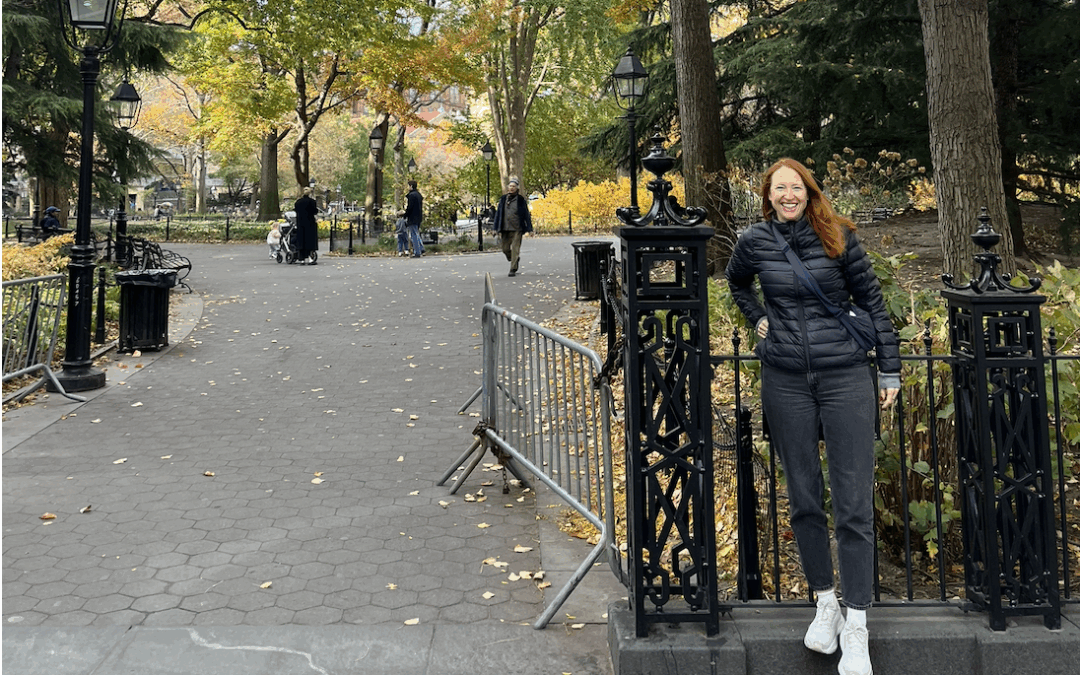
Last November, I spent two weeks pounding New York City footpaths on a scouting mission. My goal: find the new rules of customer connection. Find the clever shifts and deep customer insights that the world’s most competitive market is using to win right now.
Because as small business owners, we can’t always out-spend the big players. But we can absolutely out-think them.
What I discovered wasn’t expensive strategies reserved for big brands. It was a set of timeless principles that any business—no matter the size or budget—can apply. Here’s the lessons that stuck with me most.
- Different beats better
In a world where everyone is trying to be the ‘best’,’ the smart move is being the ‘only’ Across NYC, I visited a Michelin-starred restaurant that serves only vegetables, an optometry store that exclusively stocks retro frames, a bookshop for cat lovers (and an ice cream shop just for dogs!) Yep—they all totally stood out.
Your move: What’s the one thing your business does that no one else is brave enough to do? When’re genuinely different, you don’t have to compete on price. You aren’t just another option. You become the destination.
- The coffee shop masterclass
NYC has a coffee shop on every corner. How do the best ones survive? They don’t try to please everyone. They choose commitment over compromise.
Caffè Paradiso built a cult following by borrowing an idea from a different industry—the team behind fabled bar Dante applied cocktail efficiency to caffeine and pioneered ‘Coffee on Tap’. Smooth, fast and a total sensory shift.
Cafe Integral did the unthinkable: no laptops in the mornings. While every other café chases WiFi workers, they choose conversation, protecting the soul of their business rather than compromising it for foot traffic.
And Aimé Leon Dore, a high-end menswear brand, attached a tiny Greek café to their SoHo store. Not everyone can drop $500 on a jacket today, but anyone can buy into their world for the price of an espresso. The café is the entry point that makes the whole ecosystem work.
Your move: Three very different businesses, one shared lesson—being unapologetically yourself. What would it look like for your business to stop playing it safe and fully commit to what makes you different?
- Friction is . . . good!
In Nolita, I found Ceres, a tiny pizza shop started by two chefs from the three-Michelin-starred Eleven Madison Park. No delivery apps. No phone orders.
No slices. One enormous size, prices up to $68 and a physical list you add your name to hours ahead.
We booked at 2pm for a 5:30pm pickup. And it was worth every minute of the wait.
This is what I call Intentional Friction. When you have genuine pedigree and you limit access, you’re selling an exclusive result as much as a product. And people can’t resist that.
Your move: Where could adding a little intentional friction—a waitlist, a bespoke consultation, a limited release—elevate how your offer is perceived?
- Don’t change what matters most
Russ & Daughters has been a New York institution since 1914. For over 110 years, they’ve served hand-rolled bagels, smoked salmon and the best lox in the city. The rituals, quality and queues have been exactly the same for that whole time. Their consistency is their brand.
Your move: You don’t always need to reinvent yourself to stay relevant. Your history, rituals, and refusal to compromise on what matters can build a level of trust that money can’t buy. What’s the one thing in your business that should never change?
- Be unapologetic about your story
Moscot has been in the same Lower East Side family for five generations, starting with a pushcart in 1915. Their secret? In the 1940s, they designed a series of bold, iconic frames adopted by famous creatives from John Lennon to Johnny Depp.
Instead of chasing trends, they protected those original designs. They didn’t try to fit in. They waited for the world to come to them.
Your move: When you’re deeply rooted in who you are, you stop being a product that customers compare on price. You start being a badge of identity they’re proud to own. What’s the part of your story you should be leaning into more?
- Sell confidence, not just a product
Back Market on Broadway is tackling one of the hardest challenges in retail: changing a deeply ingrained customer habit. Most of us are conditioned to buy a brand-new phone every two years.
To break that habit, Back Market built a space where you can watch technicians work, hold refurbished devices, test them. They back it all up with 30-day returns, a one-year warranty and free shipping.
They’re selling confidence rather than devices. And it’s genius.
Your move: Where are you making it risky for people to buy from you? When a customer feels confident, their habits change—sometimes permanently. What’s one simple guarantee or safeguard you could add today to make saying yes feel easy?
- Fun is serious business
In NYC, I visited two big names in beauty retail—social media darling Glossier and Fwee, the latest viral sensation from Korea. Glossier felt like a physical gathering place for their fans—packed, high-energy, high-trust. Fwee took it further with their ‘Scoop Zone’ where customers watch their chosen products custom-filled into a tiny keychain.
It’s a masterclass in shareable retail: giving customers a reason to create free content for you.
Your move: If your experience isn’t shareable, you’re invisible. What’s one playful ‘playable’ element you could add to your customer journey so they have something to do, not just to buy?
- Become a landmark
Levain Bakery is famous for their cookies but their real genius is in how they scale without losing their soul. At their Bleecker Street shop, you’d never guess they have 17 locations.
The wall features a hand-drawn map of the neighbourhood. They hire locally. Every single night, all unsold bread is donated to local charities. They don’t just open in a suburb—they immerse themselves in it.
Your move: Your greatest asset is the way you weave yourself into the daily lives of people around you. How could you show up more meaningfully for your community this year?
The big takeaway
None of the New York businesses I visited were winning because they had the biggest budget. They had the clearest thinking. They knew who they were, who they were for and they were unapologetic about it.
That kind of clarity is available to every small business owner. You don’t need a Manhattan storefront or a multi-million-dollar marketing budget. You need the courage to make a genuine decision about who you are and then build everything around that.
Big business thinking isn’t about scale. It’s about strategy. And strategy is something we can all afford.